Automated asset location events

Active RFID Systems for Asset Tracking

Combine battery-powered tags, location references, gateways, and Rocket Tracked software to create useful movement, location, sensor, and exception events.

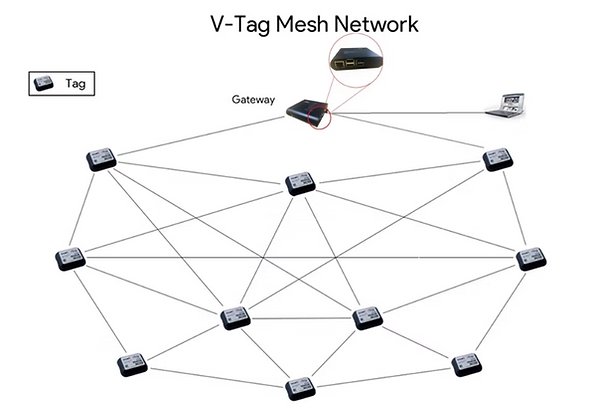
Active RFID tags, fixed location references, and gateway architecture

System definition

An active tag is only one part of the system

Active RFID tags contain a battery, allowing them to transmit without first being powered by a passive RFID reader. That changes the infrastructure and the kinds of events the system can produce, but the tag alone does not create a usable tracking process.

A complete active RFID system connects tag identity to location context, gateways, software records, event rules, alerts, history, and a response process. The system should be designed around the operational decision that a movement or location update will change.

Architecture

How an active RFID tracking system works

  1. Active asset tagA battery-powered tag identifies the movable asset and sends status or movement messages according to its configuration.
  2. Location contextFixed references or gateway coverage associate the tag with a meaningful room, area, zone, or last-known location.
  3. GatewayGateway infrastructure carries tag and location messages into the software environment.
  4. Tracking softwareRocket Tracked maps the identifier to an asset record and applies location, movement, sensor, alert, and history rules.
  5. Operational actionUsers search, review exceptions, respond to alerts, and integrate the event with the surrounding business process.

Location model

Define room, zone, area, and last-location expectations

“Real-time location” can imply more precision than the workflow actually needs or the chosen infrastructure produces. Many asset operations need to know the current room, functional area, work zone, or last reliable location event—not an exact coordinate.

Specify the smallest meaningful business area, how quickly a move should appear, how long an asset may be temporarily unseen, and what should happen when two locations are plausible. Those answers determine reference placement, gateway coverage, filtering, history, and exception behavior.

Components

Active RFID system components and responsibilities

Asset tagsCarry the identifier and configured movement, status, or sensor behavior with the tracked item.
Fixed location tagsProvide recognizable location context at rooms, zones, work areas, or reference points.
GatewaysReceive network messages and connect the active RFID infrastructure to software.
Rocket TrackedMaps identifiers to assets and manages location history, alerts, exceptions, search, and workflow rules.
Network and powerSupport gateway connectivity, health monitoring, security, and recovery.
Operating processDefines tag assignment, battery replacement, alert ownership, location changes, and exception response.

Location and movement

Events the software can use

  • Asset moved or became stationary
  • Current or last known room, zone, or area
  • Entered or left a defined location
  • Asset has not reported within an expected interval
  • Requested audible find assistance where supported

Condition and administration

Events need ownership

  • Configured sensor threshold exceeded
  • Battery status requires attention
  • Gateway or network path unavailable
  • Tag is assigned to the wrong record or location
  • Alert acknowledged, escalated, or resolved

Fit assessment

When active RFID is worth evaluating

Active RFID is not automatically better than passive RFID. It is worth the added tag and lifecycle complexity when automated location, movement, or condition events create enough operational value.

Workflow requirementFitReason
Broad room or area visibilityStrong candidateUseful when assets move among defined spaces and updates must occur without a handheld scan.
Very high tag volume at low unit valueUsually weaker fitBattery-powered tags and lifecycle work may cost more than the value of continuous automated updates.
Periodic inventory is sufficientUsually weaker fitPassive handheld RFID may solve the workflow with lower-cost tags and less fixed infrastructure.
Movement or sensor exceptions matterStrong candidateActive tags can initiate configured messages without waiting for a nearby passive reader to energize them.
Exact coordinates are required everywhereDefine carefullyArea or zone events are different from continuous precise coordinates. Specify the location decision before choosing hardware.
Mixed asset classes and workflowsConsider a hybridUse active tags where automated location events justify them and passive tags where checkpoint or scan events are enough.

Implementation

Design the system around representative movement paths

  1. Define the asset population. Record value, quantity, form factor, surface, movement, and ownership.
  2. Define the location event. Identify the rooms, areas, or zones that change a business decision.
  3. Choose the tag type. Match size, mounting, battery plan, sensors, beeper needs, and environment.
  4. Plan location references and gateways. Map coverage, network access, physical security, and maintenance access.
  5. Configure software records and rules. Define identifiers, histories, alerts, dwell, missing-report behavior, and integrations.
  6. Exercise real movement paths. Include transitions, dwell, boundary conditions, dense storage, and temporary network interruption.
  7. Document operations. Assign responsibility for batteries, tag replacement, gateway health, alerts, and map changes.

Hybrid architecture

Use active and passive RFID for different asset classes

One operation may need active location events for a smaller population of valuable mobile assets and passive identification for inventory, tools, documents, cartons, or dock-door transitions. A shared software and data model can connect both without forcing one tag technology onto every item.

Buyer questions

Active RFID system FAQ

What is an active RFID system?

An active RFID system uses battery-powered tags that can transmit according to their configuration. A complete system also needs location or gateway infrastructure, software records, event rules, and an operating process for alerts and battery lifecycle.

Does active RFID provide exact real-time coordinates?

Not automatically. The practical output depends on the technology and infrastructure. V-Tag is planned around room, zone, area, or last-location events rather than assuming continuous precise coordinates.

What equipment is needed for active RFID asset tracking?

A typical V-Tag architecture includes active asset tags, fixed location tags, one or more gateways, network connectivity, Rocket Tracked software, and a defined process for mounting, coverage, batteries, alerts, and exceptions.

Can active and passive RFID be used together?

Yes. A hybrid design can use active RFID for higher-value movable assets that need automated location events and passive RFID for inventory, checkout, fixed checkpoints, dock doors, or high-volume item identification.

What determines active RFID location performance?

Tag placement, location-reference spacing, gateway coverage, building materials, asset density, movement, network conditions, reporting configuration, and software event logic all affect the result.

What ongoing maintenance does an active RFID system require?

Plan for battery monitoring and replacement, tag attachment inspection, gateway and network health, location-map changes, alert review, software administration, and periodic verification of important movement paths.

Active RFID system design

Define the Event Before Choosing the Tag

Talk through the assets, location expectations, update timing, gateway coverage, battery lifecycle, software rules, and integrations required for the workflow.